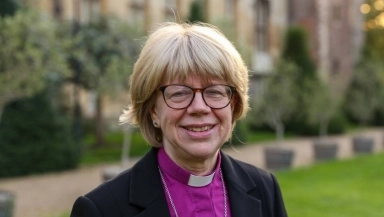
The Bishop of London, Sarah Mullally, has been announced as the 106th Archbishop of Canterbury after a selection process lasting several months.
She is the first ever female Archbishop of Canterbury and prior to her appointment, had been the Bishop of London since 2018.
A not entirely unexpected development For different perspectives of this appointment, also see: Sarah Mullally named the first female Archbishop of Canterbury; London Bishop Sarah Mullally chosen as next archbishop of CanterburyPresiding Bishop Sean Rowe congratulates new Archbishop of Canterbury
"I am very pleased at the news that Bishop Sarah Mullally, who has served as bishop of London since 2018, has been named the 106th Archbishop of Canterbury. She will be the first woman to hold the role, which was established more than 1,400 years ago...."
Evangelicals pray Sarah Mullally will restore Church of England to historic position on marriage and sexuality as next Archbishop of Canterbury
Evangelicals in the Church of England and wider Anglican Communion are praying for a return to biblical faithfulness after the Bishop of London, Sarah Mullally, was announced on Friday as the next Archbishop of Canterbury.
“Who is my neighbor?”
Two thousand years ago, a young Jewish leader brought this question to Jesus. The query still resonates today: In a world of such great need, how can anyone make a dent in the scale of suffering? Whom should we serve?
How Charlie Kirk mastered the illusion of stump debates
Charlie Kirk did not invent the method of traveling “stump debates” or campus spectacles; that tradition reaches back centuries. But he did master a modern version of it by bullying underprepared college kids rather than engaging seasoned orators, scholars or those with deep pockets and experience.
The absurdity lies not just in his tactics but in how the media framed them as legitimate debate, when in fact the entire setup was a carefully staged performance.
Why fundamentalist men won’t stop the abuse of women
Assault is not just a violation. It is a sin. The former is a legal category. The latter is a moral category.
Recently, in some evangelical circles, a contingent of folks has begun talking about the so-called “sin” of empathy. Joe Rigney brought this discussion into the limelight in 2019 with a series of blog posts at Desiring God written in the style of C.S. Lewis’s Screwtape Letters. He warned against what he called the corruptibility of compassion into empathy, presenting empathy as a demonic counterfeit — something that looks holy but ultimately harms both the empathizer and the one empathized with.
A Gaelic Church: The Scottish Episcopal Story
In Scotland, the primary expression of the church—or kirk in the Scottish tongue—is the Church of Scotland, which has long been the epitome (and, in many ways, the founder) of the Presbyterian tradition. And yet, an episcopally-governed, liturgical church has long paralleled the state church with its own unique flavor of the Anglican tradition. This traditional Scottish Episcopalianism has a unique blend of Reformed and Catholic theology, emphasizing theological similarities over distinctions. This includes a high churchmanship and a greater appeal to older church traditions—encompassing liturgical, ecclesiastical, and theological elements—and an early perseverance of the Gaelic language in worship, tying it even more deeply to Scotland’s ancient Celtic roots.
While this emphasis on wide, introductory topics is the main strength of the book, it also leads to its greatest weaknesses. Some of Bevins’ presentation of Anglican history is shallow to the point of bordering on propagating mythology. For example, the relatively modern and historically inaccurate concept of Anglicanism as the middle way between Roman Catholicism and Protestantism is floated frequently, including the astonishing claim that Richard Hooker’s Laws of Ecclesiastical Polity argued that Anglicanism retains the best of Roman Catholicism and Protestantism. It would be an understatement to point out that Hooker, like the rest of the Elizabethan church, was far from friendly toward Rome!
In the days leading up to September 23 and 24, some people quit their jobs and sold their cars and houses, convinced that the rapture would take place. The modern idea, especially popular among American evangelicals, refers to a purported first return of Jesus, when his followers—living and dead—would suddenly disappear from the earth and ascend to heaven.
In 2015, I planted a church in the heart of Seattle. I had vision, passion, and grit. Unfortunately, I also had an insatiable need for approval. After every sermon, every teaching, every leadership decision, I found myself watching people’s reactions. Did they nod in agreement? Did they smile at me on the way out? Did they come back the next week? If I sensed affirmation, I felt like I could breathe again. If I didn’t, I replayed every word and second-guessed every choice. It was exhausting.
Six Essential Pastoral Meetings No One is Scheduling For You<
It’s easy to focus on what is right in front of you—the fires, the squeaky wheel, the pop-in visit. However, a pure reactive management style does not help a church move forward. Josh and Sam discuss some meetings that take initiative but will pay many dividends.
The Hollow Comfort of AI in Worship and Grief
In a recent Sunday service at Prestonwood Baptist Church in Plano, Texas, pastor Jack Graham paused his sermon to play an audio clip of the late Charlie Kirk, the conservative activist and founder of Turning Point USA, who was tragically assassinated earlier this month. What made the clip from the service go viral, however, was that the audio was entirely fake.
Easy Sunday School Activities To Use in a Pinch
Need some easy Sunday school activities to fill time? When your lesson is over but class time isn’t, what do you do? Make sure kids are bored no more! Try a Plan in a Can!
I will post further reactions to the appointment as I come across them on the internet.How China’s Persecuted Reach China’s Marginalized
“Who is my neighbor?”
Two thousand years ago, a young Jewish leader brought this question to Jesus. The query still resonates today: In a world of such great need, how can anyone make a dent in the scale of suffering? Whom should we serve?
How Charlie Kirk mastered the illusion of stump debates
Charlie Kirk did not invent the method of traveling “stump debates” or campus spectacles; that tradition reaches back centuries. But he did master a modern version of it by bullying underprepared college kids rather than engaging seasoned orators, scholars or those with deep pockets and experience.
The absurdity lies not just in his tactics but in how the media framed them as legitimate debate, when in fact the entire setup was a carefully staged performance.
Why fundamentalist men won’t stop the abuse of women
Assault is not just a violation. It is a sin. The former is a legal category. The latter is a moral category.
Blaming the woman for being sexually assaulted is an attitude also found in the larger culture.Empathy for enemies is the heart of the gospel
Recently, in some evangelical circles, a contingent of folks has begun talking about the so-called “sin” of empathy. Joe Rigney brought this discussion into the limelight in 2019 with a series of blog posts at Desiring God written in the style of C.S. Lewis’s Screwtape Letters. He warned against what he called the corruptibility of compassion into empathy, presenting empathy as a demonic counterfeit — something that looks holy but ultimately harms both the empathizer and the one empathized with.
A Gaelic Church: The Scottish Episcopal Story
In Scotland, the primary expression of the church—or kirk in the Scottish tongue—is the Church of Scotland, which has long been the epitome (and, in many ways, the founder) of the Presbyterian tradition. And yet, an episcopally-governed, liturgical church has long paralleled the state church with its own unique flavor of the Anglican tradition. This traditional Scottish Episcopalianism has a unique blend of Reformed and Catholic theology, emphasizing theological similarities over distinctions. This includes a high churchmanship and a greater appeal to older church traditions—encompassing liturgical, ecclesiastical, and theological elements—and an early perseverance of the Gaelic language in worship, tying it even more deeply to Scotland’s ancient Celtic roots.
While this article is edifying, I recommend against adopting a uncritical attitude toward articles of this type as they too often contain presumptions that are largely speculative and may use language that means different things to different people. For example, to some people "Catholic" refers to the beliefs and practices of the first six centuries of the Christian Church; to others, the belief and practices of the Church of Rome, particularly in its post-Trent, pre-Vatican II iteration.Book Review: Simply Anglican: An Ancient Faith for Today's World
While this emphasis on wide, introductory topics is the main strength of the book, it also leads to its greatest weaknesses. Some of Bevins’ presentation of Anglican history is shallow to the point of bordering on propagating mythology. For example, the relatively modern and historically inaccurate concept of Anglicanism as the middle way between Roman Catholicism and Protestantism is floated frequently, including the astonishing claim that Richard Hooker’s Laws of Ecclesiastical Polity argued that Anglicanism retains the best of Roman Catholicism and Protestantism. It would be an understatement to point out that Hooker, like the rest of the Elizabethan church, was far from friendly toward Rome!
In 𝑂𝑙𝑑 𝐴𝑛𝑔𝑙𝑖𝑐𝑎𝑛𝑖𝑠𝑚 𝑎𝑛𝑑 𝑀𝑜𝑑𝑒𝑟𝑛 𝑅𝑖𝑡𝑢𝑎𝑙𝑖𝑠𝑚 and 𝐴𝑛 𝐴𝑝𝑝𝑒𝑎𝑙 𝑓𝑟𝑜𝑚 𝑡ℎ𝑒 𝑇𝑤𝑒𝑛𝑡𝑖𝑒𝑡ℎ 𝐶𝑒𝑛𝑡𝑢𝑟𝑦 𝑡𝑜 𝑡ℎ𝑒 𝑆𝑖𝑥𝑡𝑒𝑒𝑛𝑡ℎ 𝑎𝑛𝑑 𝑆𝑒𝑣𝑒𝑛𝑡𝑒𝑒𝑛𝑡ℎ 𝐶𝑒𝑛𝑡𝑢𝑟𝑖𝑒𝑠 (𝑜𝑟 𝑡ℎ𝑒 𝐹𝑎𝑖𝑡ℎ 𝑎𝑛𝑑 𝑃𝑟𝑎𝑐𝑡𝑖𝑐𝑒𝑠 𝑜𝑓 𝑡ℎ𝑒 𝐹𝑖𝑟𝑠𝑡 𝑇𝑤𝑜 𝐶𝑒𝑛𝑡𝑢𝑟𝑖𝑒𝑠 𝑜𝑓 𝑡ℎ𝑒 𝑅𝑒𝑓𝑜𝑟𝑚𝑒𝑑 𝐴𝑛𝑔𝑙𝑖𝑐𝑎𝑛 𝐶ℎ𝑢𝑟𝑐ℎ), Canon Frederick Meyrick shows from their sermons and writings that the group of 16th and 17th century Anglican divines that Anglo-Catholics claim were precursors of the Tractarian were nothing of the sort.Priests Address Viral Rapture Rumors
In the days leading up to September 23 and 24, some people quit their jobs and sold their cars and houses, convinced that the rapture would take place. The modern idea, especially popular among American evangelicals, refers to a purported first return of Jesus, when his followers—living and dead—would suddenly disappear from the earth and ascend to heaven.
Jesus also said that he would not return until the gospel was proclaimed to all the peoples of the earth. We are far from having done that.Made For Approval, Just Not Theirs
In 2015, I planted a church in the heart of Seattle. I had vision, passion, and grit. Unfortunately, I also had an insatiable need for approval. After every sermon, every teaching, every leadership decision, I found myself watching people’s reactions. Did they nod in agreement? Did they smile at me on the way out? Did they come back the next week? If I sensed affirmation, I felt like I could breathe again. If I didn’t, I replayed every word and second-guessed every choice. It was exhausting.
Six Essential Pastoral Meetings No One is Scheduling For You<
It’s easy to focus on what is right in front of you—the fires, the squeaky wheel, the pop-in visit. However, a pure reactive management style does not help a church move forward. Josh and Sam discuss some meetings that take initiative but will pay many dividends.
The Hollow Comfort of AI in Worship and Grief
In a recent Sunday service at Prestonwood Baptist Church in Plano, Texas, pastor Jack Graham paused his sermon to play an audio clip of the late Charlie Kirk, the conservative activist and founder of Turning Point USA, who was tragically assassinated earlier this month. What made the clip from the service go viral, however, was that the audio was entirely fake.
Easy Sunday School Activities To Use in a Pinch
Need some easy Sunday school activities to fill time? When your lesson is over but class time isn’t, what do you do? Make sure kids are bored no more! Try a Plan in a Can!
6 Ways to Create a Culture of Evangelism
Discover six strategies to foster a culture of evangelism in your church, empowering believers to share the gospel with confidence.
The Hard-to-Reach are Back-to-School
In our universities, our communities, and maybe even our own neighborhoods, believers have a million opportunities to make Jesus known to people who might never encounter Christ in their own lands. These are places where Christians are persecuted, churches face restrictions, and access to the gospel can be scarce.
But here they are, just in time for our back-to-school routines. It’s an extraordinary opportunity that churches can respond to in ordinary ways: show hospitality, build friendships, and share the gospel with international students.
Discover six strategies to foster a culture of evangelism in your church, empowering believers to share the gospel with confidence.
The Hard-to-Reach are Back-to-School
In our universities, our communities, and maybe even our own neighborhoods, believers have a million opportunities to make Jesus known to people who might never encounter Christ in their own lands. These are places where Christians are persecuted, churches face restrictions, and access to the gospel can be scarce.
But here they are, just in time for our back-to-school routines. It’s an extraordinary opportunity that churches can respond to in ordinary ways: show hospitality, build friendships, and share the gospel with international students.

No comments:
Post a Comment