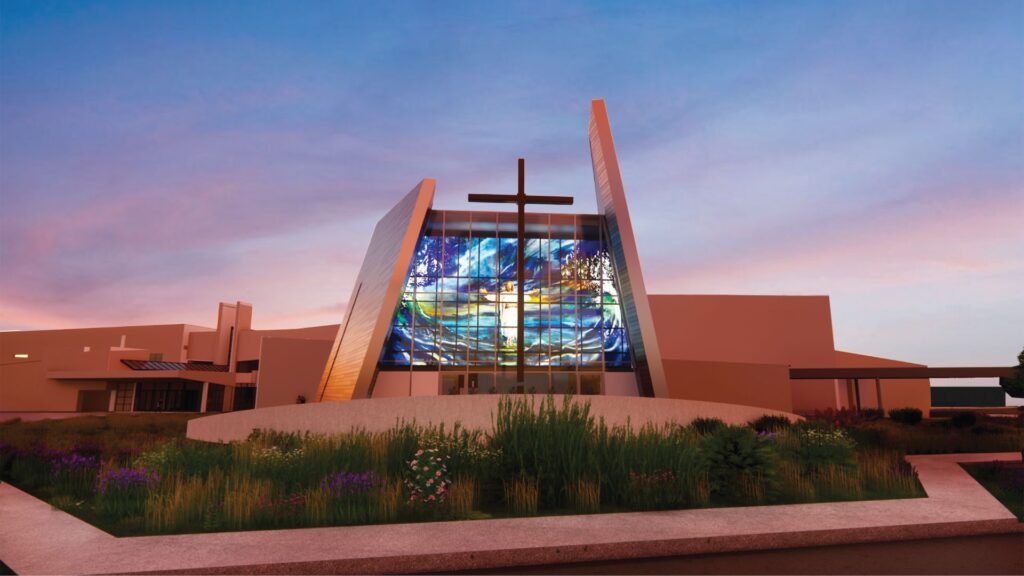
The Hartford Institute for Religion Research consistently produces reports about congregational life in the United States that show trends important for church leaders to understand. Their Faith Communities Today research provides snapshots of congregations of all sizes across religious traditions in the country at five-year intervals. One special area of expertise with which they are associated is their analysis of trends among the very largest congregations, sometimes called megachurches. These are churches with in-person weekly attendance of 2,000 or more.
The Unchurched Next Door: New Tools and Insights to Really Reach Them - Replay
If you missed Thursday's webinar or would like to view it again, I am posting a link to a replay of the webinar and a link to the slides. The slides are downloadable.
The Unchurched Next Door: New Tools and Insights to Really Reach Them - SlidesUnchurched Receptivity Report
Discover how many unchurched people live around your church, how receptive they are, and where your greatest opportunities for outreach exist.
This tool will be very helpful in identifying the receptivity groups in the community and in tailoring efforts to reach and engage these groups for the church that is serious about the Great CommissionAmericans’ Confidence in the Church Falls Back Near Record-Low
Fewer U.S. adults express the highest levels of confidence in the church, after a brief increase last year, according to Gallup.
How do we respond to Lindsey Graham's death? It matters.
Sen. Lindsey Graham has died. Why are people responding in such a tasteless way?
Also See: Children are hungry tonight because of Lindsey GrahamIf the church doesn’t rise up for the disabled, who will?
Moving forward does not require first answering every question. The gospel calls us to simply take the next right step.
European Evangelicals Draw A Clear Distinction From Their American Counterparts
The European Evangelical Alliance, which represents some 23 million evangelical Christians on the continent, recently released an important report “European Evangelicals in Public Life: Our Identity and Contribution.” It summarizes who European evangelicals are, what they believe, and what their major stances are on current public policy issues.
Normally, such a statement would draw little attention outside its own circles. Its primary audience is European media and others in public life, which sadly are still all too likely to portray evangelicals in very different countries and contexts through stereotypes of American evangelicals. It also illustrates current tensions about America in the worldwide church.
Also See: Evangelicals raise concern about detention of families and children under EU's stricter asylum rulesHow to Wait for Cultural Reckoning
After decades of steady liberalization, society appears to be having second thoughts about some aspects of America’s (im)moral revolution.
We may not want to hear it, however, Joe Carter has a point: We don't recognize the damage someone or something can do until they has already done damage. Even then we may refuse to recognize how damaging that person or thing is. This refusal serves only to compound the damage, to make it worse!Lay Preacher Training Informational Webinar
The role of lay preacher has been an important part of the church from its earliest days. As the clergy shortage grows and churches are under increased financial strain, the need for licensed lay preachers grows each year.
Scripture that Sticks with Us Shapes Our Faith
I was born and raised in the Bible Belt, a region of the U.S. known to have higher church attendance. Like most people in my context, I grew up going to church most of the Sundays of my childhood.
Each Sunday, like most churches, a Scripture verse or two was read, and our pastor preached about the passage. As a kid I often left the service confused about how these pieces of Scripture fit together as a broader story.
While we should understand that one or a few verses can never adequately represent the Bible as a whole, there is still value in holding tightly to specific verses as they relate to our walk of faith.
Striving for Human Excellence (While accepting that you are still a fallen sinner)
What Christians need in a time of increasing artificiality (AI) is to lean into their humanity, into their distinctly human excellence. Human excellence, what I call magnanimity To Live Well, doesn’t mean perfectibility, but rather our innate capacity for greatness as God designed us, which shall be different based on each individual. But the remarkable thing is that every human being is created for their own kind of excellence, endowed by their Creator with gifts, skills, and talents to exercise for his glory and the good of their neighbor. We should strive to grow in these areas as well as in universal excellences like in kindness to others, in generosity, in grace, in peace, in the virtues, in the Fruits of the Spirit, all so that we can honor God and love our neighbor more. The goal is not to earn God’s favor or build an identity or become “good enough” for anything in particular, but to be faithful to God by living into what we were created to be: “For we are his workmanship, created in Christ Jesus for good works, which God prepared beforehand, that we should walk in them” (Ephesians 2:10). That’s all we are doing, walking in the good works which God created for us beforehand.
Paul Shows Us How to Confront Others with the Gospel
Spiritual truths are spiritually discerned. A special work of the Holy Spirit is necessary if people are ever to be brought to faith. Luke made that point explicitly in the case of Lydia’s conversion in the previous chapter of Acts, saying, “The Lord opened her heart to pay attention to what was said by Paul” (Acts 16:14). Without that work of the Spirit in a person’s heart, no one can come to faith in Christ.
Image Credit: Resurrection, Leawood, Kansas

No comments:
Post a Comment